Best Stretching & Mobility Tools for Flexibility (2026)
Updated 2026 · 12 min read · 8 products reviewed
Flexibility and mobility are distinct but complementary qualities — flexibility describes passive range of motion in a joint, while mobility encompasses active control through that range. Both decline with age, sedentary behavior, and cumulative training stress, contributing to compensation patterns, overuse injuries, and reduced athletic performance. The right tools make consistent flexibility and mobility work more accessible, safer, and more effective than unassisted stretching alone. Stretching straps allow progressive depth control without partner assistance — the non-elastic varieties popular in physical therapy prevent the bounce-and-snap risk of elastic bands while giving precise incremental control. Yoga blocks prop joints into positions that shortened muscles would otherwise prevent, allowing the nervous system to adapt to new ranges over time. Foot and calf stretchers address the critical but often neglected ankle complex — tight plantar fascia, shortened Achilles tendons, and restricted ankle dorsiflexion are among the most common contributors to lower-body overuse injuries. This guide covers six tools across these categories, selected for construction quality, specificity of application, and durability.
Quick Comparison

Gaiam Yoga Block Supportive Latex-Free Eva Foam Non-Slip
Gaiam's yoga block is the most versatile mobility prop on this list — supporting poses, deepening stretches, bridging flexibility gaps for users recovering from injury.
- ✓Latex-free EVA
- ✓Beveled edges prevent pressure points
- ✓Supports yoga Pilates rehab
- ✓Non-slip surface
- ✗Compresses over time
- ✗Doesn't replace stretching strap
Why We Recommend It
Gaiam's yoga block is the most versatile mobility prop on this list — supporting poses, deepening stretches, bridging flexibility gaps for users recovering from injury.
Yoga, Pilates, and mobility-limited users
Use at three heights: tall (9") for tight hamstrings, medium (6") as flexibility improves, flat (4") for advanced poses. Hold each supported stretch 30–60 seconds. Excellent for half-moon pose and supported bridge.

Trideer Non-Elastic Stretching Strap with Loops Physical Therapy Rehab
Trideer's non-elastic strap gives controlled precise range-of-motion work without snap-back risk. Multiple loops allow incremental stretching depth — critical for post-surgical rehab.
- ✓Non-elastic for precise ROM
- ✓Multiple loops for incremental depth
- ✓Good for post-surgery
- ✓Lightweight
- ✗No resistance training use
- ✗Learning curve for beginners
Why We Recommend It
Trideer's non-elastic strap gives controlled precise range-of-motion work without snap-back risk. Multiple loops allow incremental stretching depth — critical for post-surgical rehab.
Post-surgery rehab and hamstring stretching
Loop around your foot while lying on your back. Gently pull to find end range, hold 20–30 seconds, then move to the next loop for greater depth. Never pull into pain — stop at comfortable tension. 2–3 sets per side.

Trideer Non-Elastic Stretching Strap with Loops Aesthetic Version
Mechanically identical to the standard Trideer — same non-elastic construction, same loop system, same PT-grade control. Aesthetic colorway differentiates it.
- ✓Non-elastic precision
- ✓Multiple loops
- ✓Aesthetic colorway
- ✓Lightweight and washable
- ✗No performance upgrade
- ✗Same learning curve
Why We Recommend It
Mechanically identical to the standard Trideer — same non-elastic construction, same loop system, same PT-grade control. Aesthetic colorway differentiates it.
Same PT strap in a more colorful design
Same technique as the standard Trideer — loop around foot while lying down, pull to tension, hold 20–30 seconds, advance a loop for greater depth. The aesthetic colorway makes it more appealing to use daily.

OPTP The Original Stretch Out Strap with Exercise Book USA Made
OPTP's Stretch Out Strap is a physical therapy staple — designed in the USA, used in clinical settings for decades. The bundled exercise book transforms it into a guided flexibility program.
- ✓PT-designed and clinic-tested
- ✓Exercise book included
- ✓Made in USA
- ✓Durable nylon
- ✗Premium price
- ✗Less colorful than newer competitors
Why We Recommend It
OPTP's Stretch Out Strap is a physical therapy staple — designed in the USA, used in clinical settings for decades. The bundled exercise book transforms it into a guided flexibility program.
Therapist-recommended strap with guided exercise content
Follow the included exercise book for a structured flexibility program. Loop around foot or hand as shown for each stretch. Non-elastic construction means what you feel is real range of motion — not rubber recoil. Hold each stretch 20–30 seconds.
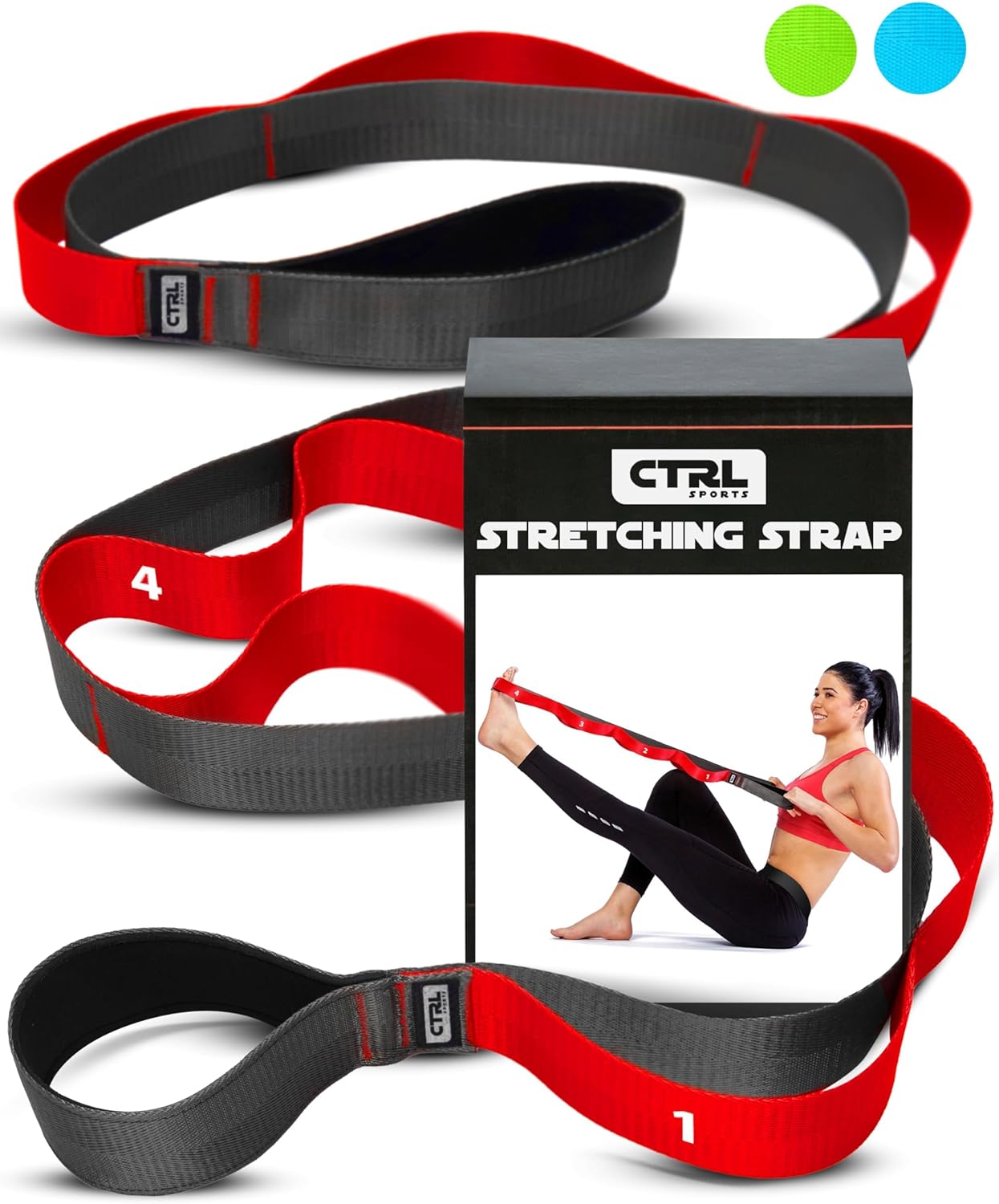
Non Elastic Stretching Strap with Loops Physical Therapy Fascia Hamstring
A solid budget alternative to Trideer and OPTP — non-elastic with multiple loops for controlled depth. Covers fascia, hamstring, and leg stretching effectively.
- ✓Non-elastic precise ROM
- ✓Multiple loops
- ✓Works for fascia hamstring
- ✓Very affordable
- ✗No included guide
- ✗Build quality below OPTP
Why We Recommend It
A solid budget alternative to Trideer and OPTP — non-elastic with multiple loops for controlled depth. Covers fascia, hamstring, and leg stretching effectively.
Budget-conscious PT strap shoppers
Loop around foot while lying on back. Advance one loop at a time, holding each position 20–30 seconds. Works well for hamstrings, IT band, hip flexors, and calf stretching. Use daily for measurable flexibility gains in 4–6 weeks.

Comness Foot and Calf Stretcher Plantar Fasciitis Achilles Yoga Black
Targets the specific stretch patterns that plantar fasciitis, Achilles tendonitis, and heel spurs respond to — unlike general-purpose straps that don't prioritize foot angle.
- ✓Targets plantar fasciitis specifically
- ✓Effective for Achilles and heel spur
- ✓Simple focused design
- ✓Affordable
- ✗Narrower use case
- ✗Less versatile for upper body
Why We Recommend It
Targets the specific stretch patterns that plantar fasciitis, Achilles tendonitis, and heel spurs respond to — unlike general-purpose straps that don't prioritize foot angle.
Plantar fasciitis, Achilles, and heel spur stretching
Loop around the ball of your foot while seated or lying down. Pull toward your shin until you feel the Achilles and plantar fascia stretch. Hold 30 seconds, release, repeat 3x per side. Use every morning before getting out of bed.

Trideer Yoga Blocks 2 Pack Soft Non-Slip Foam Beveled Edges
Trideer's two-pack solves the problem single blocks leave open — bilateral support for forward folds, bridges, and seated poses. Soft non-slip foam with beveled edges keeps longer holds comfortable.
- ✓Two blocks included
- ✓Soft non-slip foam
- ✓Beveled comfortable edges
- ✓Latex-free and odor resistant
- ✗Softer than cork for balance poses
- ✗Compresses under full body weight
Why We Recommend It
Trideer's two-pack solves the problem single blocks leave open — bilateral support for forward folds, bridges, and seated poses. Soft non-slip foam with beveled edges keeps longer holds comfortable.
Two-block yoga and stretching setups
Use both blocks in poses requiring bilateral support — under each hand in forward folds, or stacked for seated hip openers. Rotate between the three heights as flexibility improves. Hold supported stretches 30–60 seconds.

Gaiam Yoga Block Supportive Latex-Free EVA Foam Beveled Edges
Gaiam's standalone EVA foam block is the category standard — supportive, latex-free, and non-slip. The single-block format suits meditation and poses where one point of support is enough.
- ✓Trusted Gaiam quality
- ✓Latex-free EVA foam
- ✓Non-slip beveled design
- ✓Affordable entry point
- ✗Single block — pairs cost more
- ✗EVA compresses over years of use
Why We Recommend It
Gaiam's standalone EVA foam block is the category standard — supportive, latex-free, and non-slip. The single-block format suits meditation and poses where one point of support is enough.
A single reliable block for yoga, Pilates, and meditation
Position at tall, medium, or flat height depending on the pose and your flexibility. Use under the hand in triangle and half-moon, under the sacrum for supported bridge, or under the hips for seated meditation. Hold 30–60 seconds per stretch.
Stretching & Mobility Buying Guide
Non-Elastic vs. Elastic Straps
For physical therapy and rehab applications, non-elastic stretching straps are strongly preferred. The absence of recoil means you control depth completely — no accidental overstretching if you slip or fatigue. Elastic resistance bands serve different purposes (strengthening) and should not replace non-elastic straps for flexibility work.
Number of Loops
A stretching strap with more loops allows incremental depth adjustment — you move to the next loop when you've adapted to your current range. Single-loop designs require you to estimate depth manually, which beginners find difficult. Six or more loops is ideal for controlled progressive stretching.
Yoga Block Density
EVA foam blocks balance firmness and cushioning appropriately for most yoga and mobility work. Cork blocks are firmer and heavier — preferred for inversions and poses requiring maximum stability. For general flexibility and rehab, EVA foam is the practical choice.
Specificity for Foot and Ankle
General stretching straps can address ankle flexibility, but dedicated foot stretchers optimize the stretch angle specifically for plantar fascia, Achilles, and dorsiflexion. If ankle mobility or plantar fasciitis is a primary concern, a dedicated stretcher delivers better results than improvised positioning with a general strap.
Pro Tip: Start with the top-ranked option in this category. Most users find the rank #1 product handles 90% of their recovery needs — upgrade only if you have specific requirements addressed by the alternatives.
How to Choose the Right Stretching & Mobilit
Recovery Note: Tools work best as part of a consistent routine. A quality stretching & mobilit used regularly provides more benefit than the most expensive option used sporadically.